What is a harmonic?

Additive Synthesis 101

Part 1, What is a harmonic.

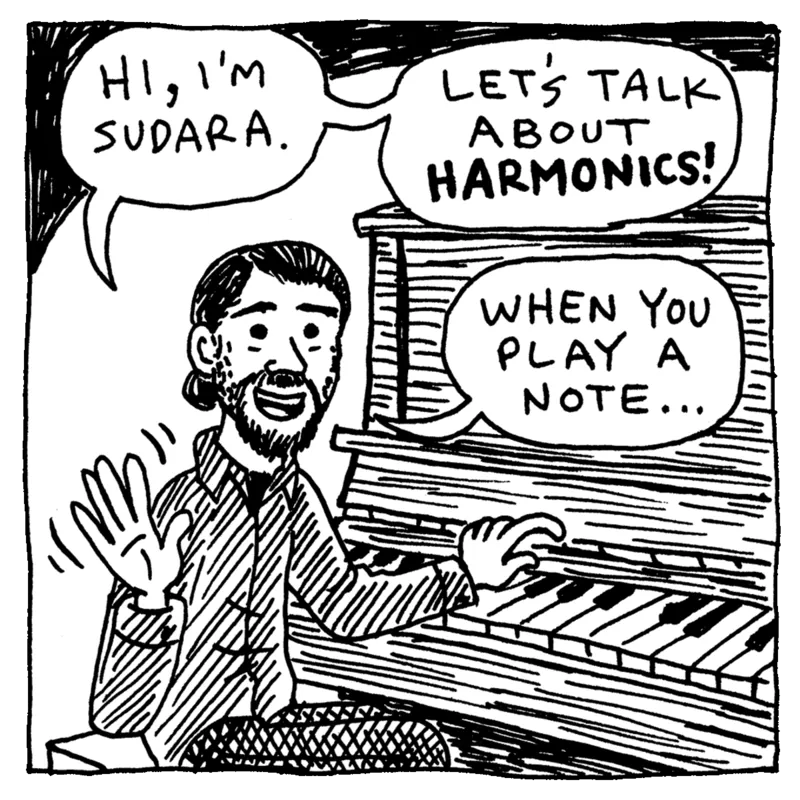
Sudara waves from a piano: ‘Hi, I'm Sudara. Let's talk about harmonics! When you play a note…’
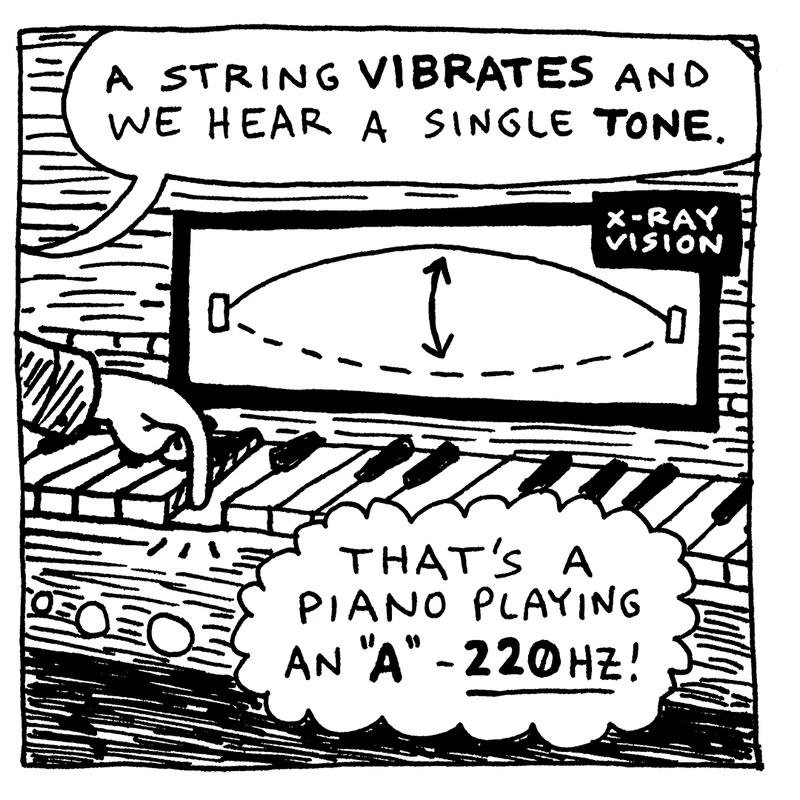
An X-ray view of a piano string vibrating end to end: ‘A string vibrates and we hear a single tone. That's a piano playing an A — 220Hz!’
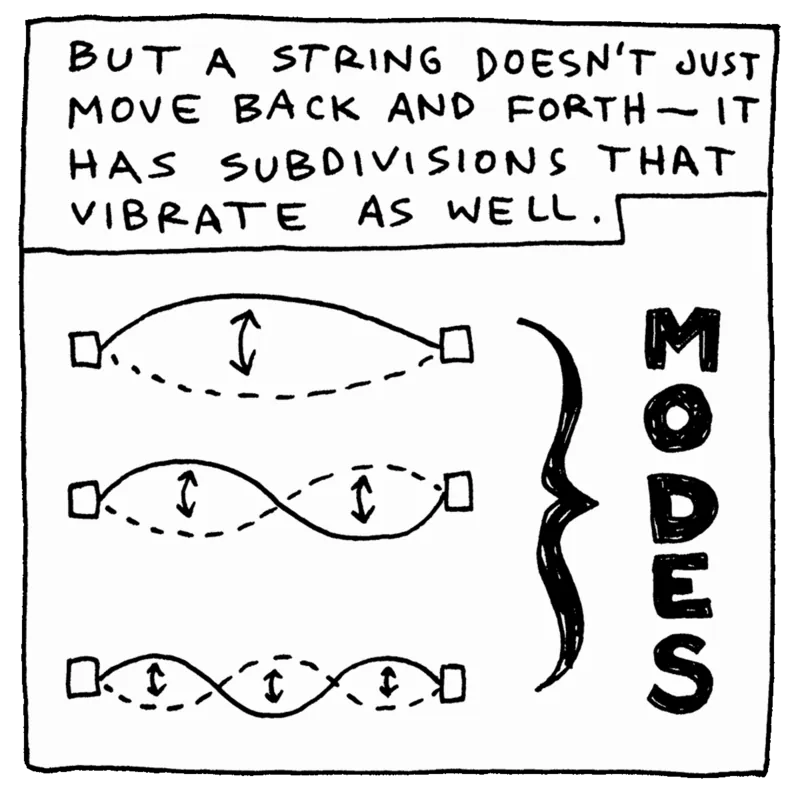
Diagrams of a string vibrating in one, two, and three subdivisions, bracketed and labeled ‘modes’: ‘But a string doesn't just move back and forth — it has subdivisions that vibrate as well.’
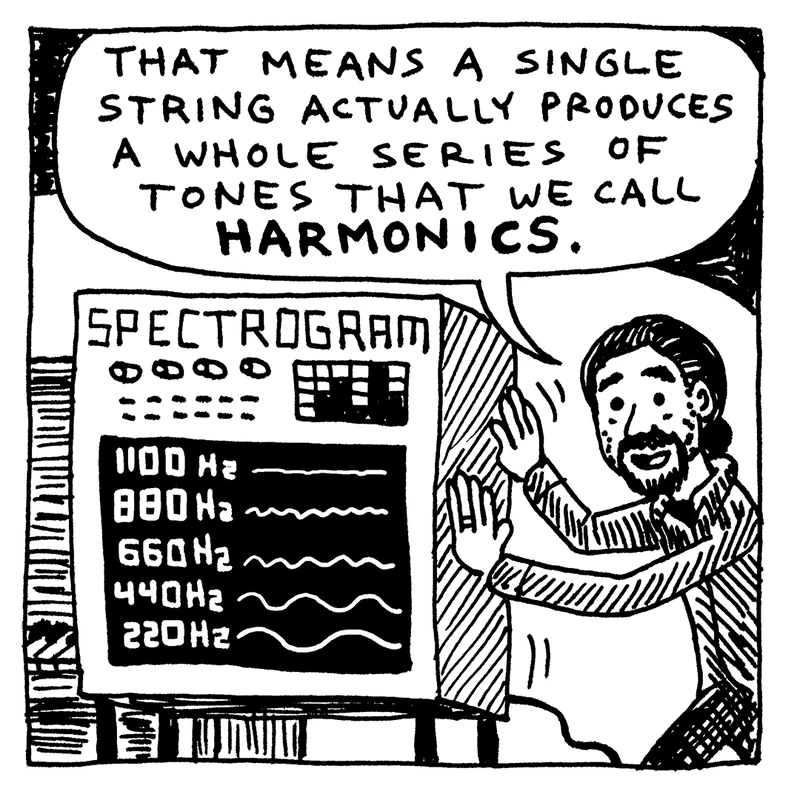
Sudara points at a spectrogram showing 220, 440, 660, 880, and 1100 Hz: ‘That means a single string actually produces a whole series of tones that we call harmonics.’
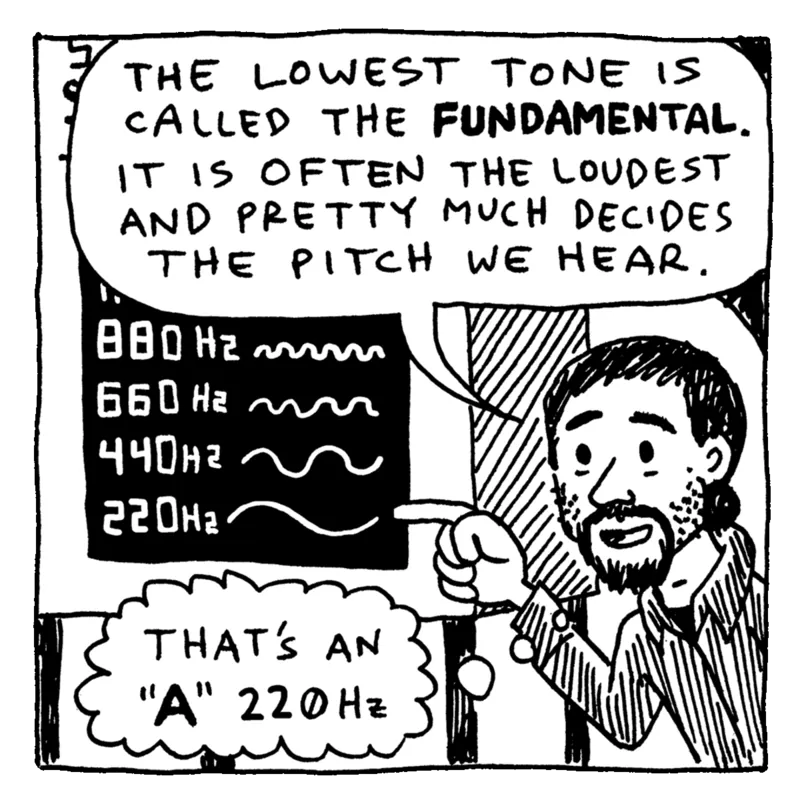
Sudara points at the 220Hz line on the spectrogram: ‘The lowest tone is called the fundamental. It is often the loudest and pretty much decides the pitch we hear. That's an A 220Hz.’
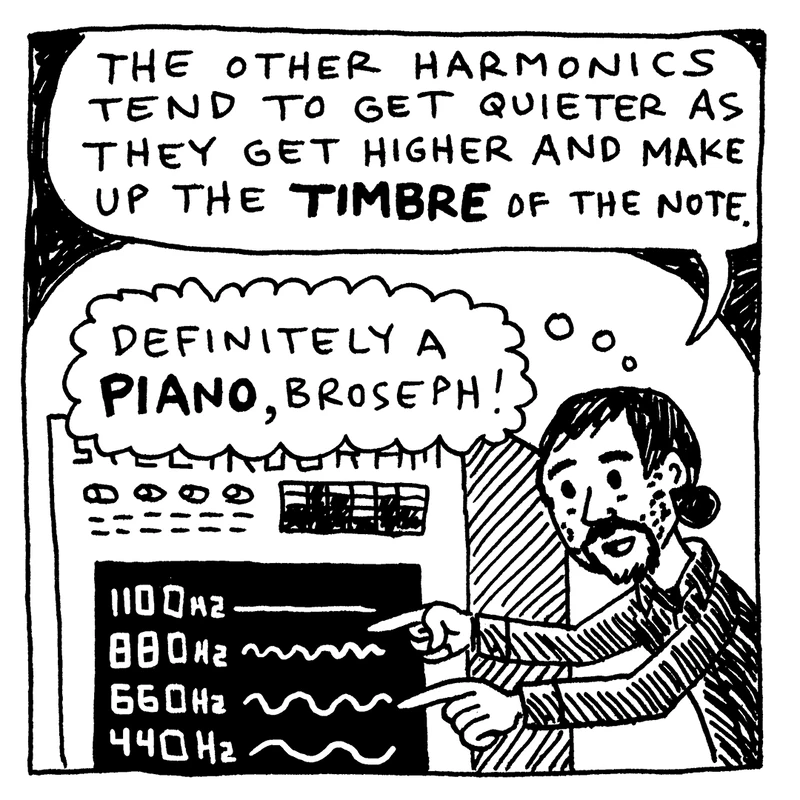
Sudara thinks ‘Definitely a piano, broseph!’ while pointing at the spectrogram: ‘The other harmonics tend to get quieter as they get higher and make up the timbre of the note.’
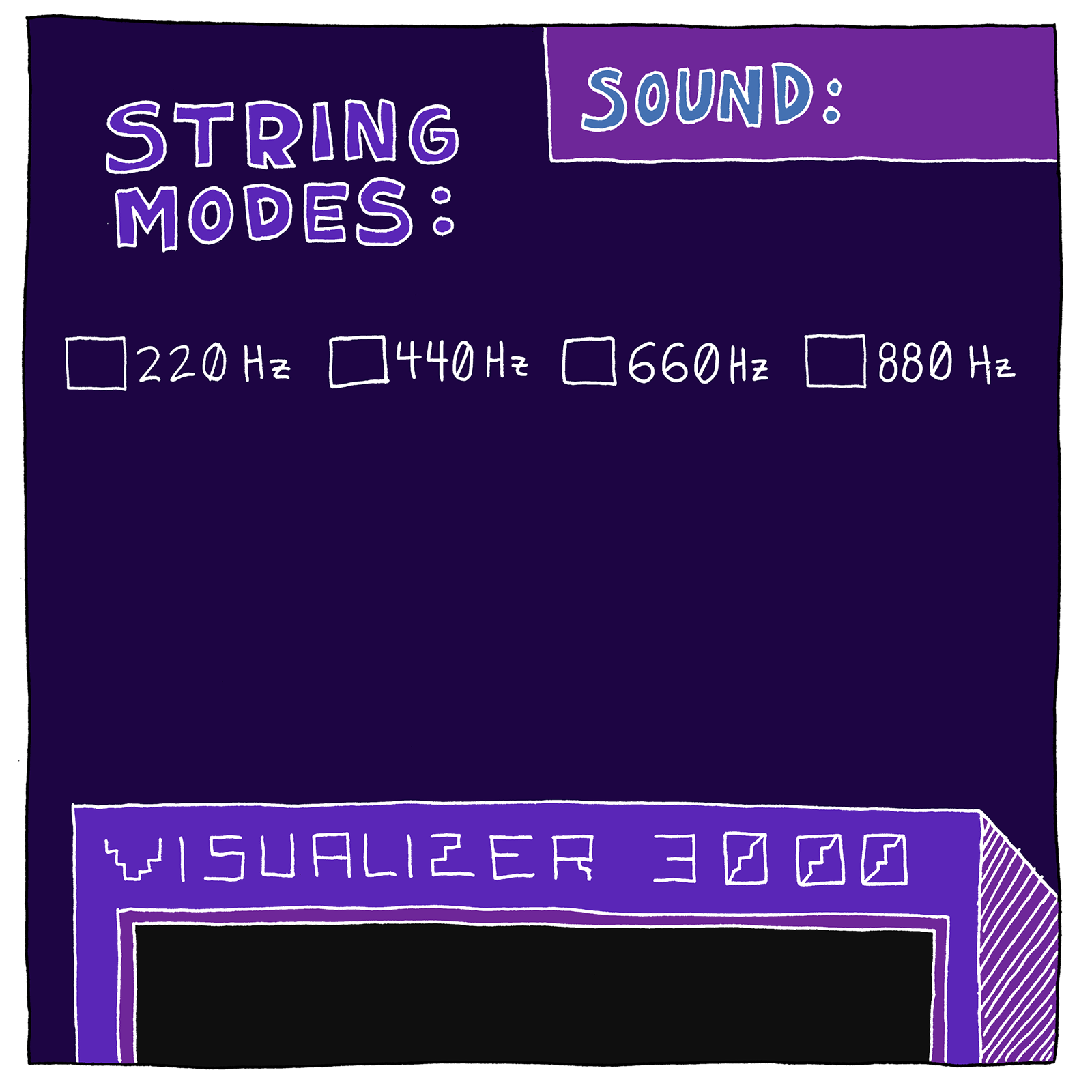
Sudara leans on the panel edge: ‘You can explore these ideas yourself by playing with the interactive visualizer below!’
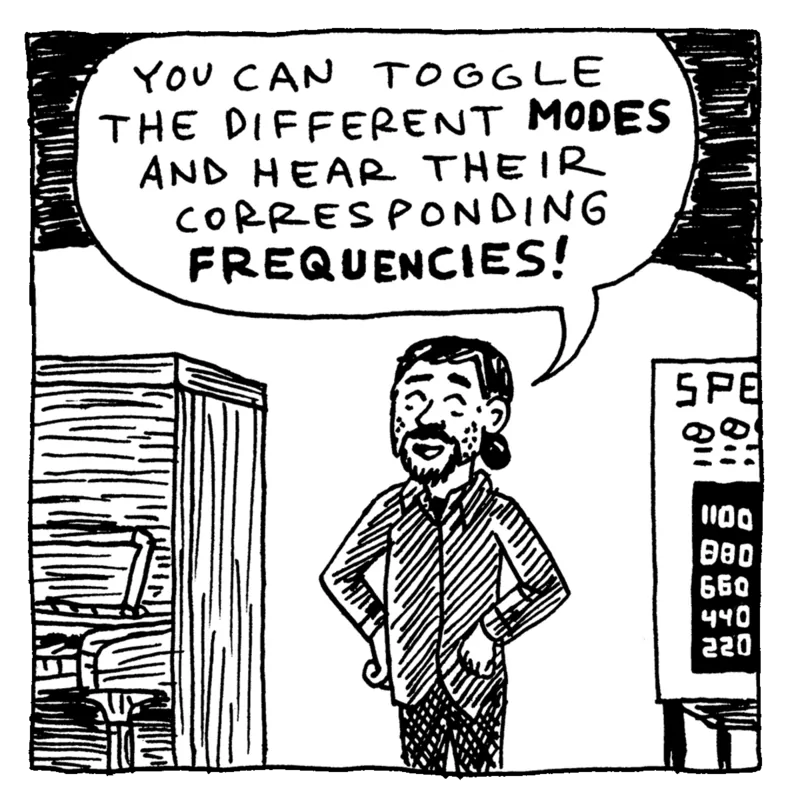
Sudara stands beside the spectrogram: ‘You can toggle the different modes and hear their corresponding frequencies!’
Interactive harmonic panel